United Kingdom

Career Tips for International Students

For the past two years, I have been a part of an intrapreneurial team that developed career programmes for ambitious international students who were interested in working in the UK after graduation. I learnt a lot along the way and that’s why I want to share the three most crucial aspects that I think all international students should know.

1. Start early & gain experience

Many international students start to think about their careers in their final year. Unfortunately, this might be too late, especially if you don’t have relevant experience, which takes me to the second part of this point.

An academic degree is not enough anymore. Employers are searching for candidates who have gained experience during their studies. The best possible experience would be an internship in your own industry, but there are many other ways to show how proactive you are, for example, volunteering or being an active member of university societies.

Having these experiences will also allow you to have great interview examples that demonstrate how you have applied your learnings into practice.

2. Polish your application materials

Different industries and countries require different kinds of application materials. I, for example, had a photo and a date of birth on my CV, which is completely normal in Finland, but in the UK this is something that should not be included due to strict anti-discrimination laws. So, remember to research the application material requirements specific to your industry and the country where you wish to work.

Did you know that nowadays your CV and cover letter might not even be seen by a human? More and more companies are using an Application Tracking System (ATS) that allows the company to scan and rank hundreds of applications in seconds. If you don’t use the right keywords or if the ATS cannot read your application because of the wrong kind of format, your application might end up in the ‘NO’ pile before anyone in the organisation sees it. To get past this first hurdle, you need to understand how the ATS works. You can get started by checking this summary on the Flexjobs website.

3. Networking

Did you know that 60-80% of jobs are never advertised? Recommendations and personal networks are used to fill vacancies. That’s why it’s very important to start growing your professional networks as early as possible. Attend networking events and get connected with peers and professors. You can also network through LinkedIn, find people who work in companies that you are interested in or who are doing jobs that you would like to see yourself in in the future. Ask them questions about their career journey or what kind of tips they would have for you to achieve a similar position in the future.

Finding a job in another country is definitely not easy, as there are many elements during the application journey that might be different to your own culture. I hope that these three tips have given you some ideas that will help you on your career path.

What other career tips would you share with international students?

Uncategorized

How can educators make the world more sustainable?

What can we as educators do to support sustainable development and circular economy?

I work as a business and entrepreneurship coach which means I work with young people around the world. The amount of people I work with is not huge, but then again if educators around the world would come together we could reach quite an audience. Remember, these young people are future change-makers, which means our actions might have a bigger impact than we realise. 

So what can we do? 

In the last few days, I have been searching through many articles and web pages and I want to share two things that I believe all the educators should do; raising awareness and empowering people.

Awareness 

It all starts with understanding the current situation and the challenges that we are facing. For example, are you aware that in 2020 all of our yearly resources where used up by the 22nd of August? 

We also need to make sure people are aware of our current approach which is very linear “take-make-waste” and get people to see all the opportunities and benefits that the circular economy could provide. If you are new to the subject, I recommend watching this brilliant short video (it is only 3 min 48 seconds long).

So how can we adapt this to our teaching? The internet is full of materials, which is great as it means we don´t have to start from scratch. There are two web pages which are my favourites in relation to providing free quality lesson plans and ideas. 

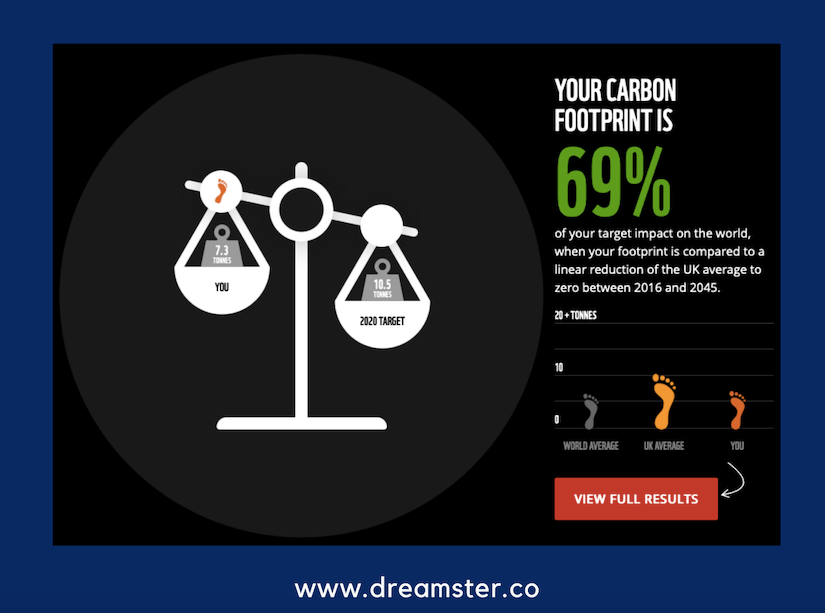
Now that we understand the concept it is time to find out about our own ecological footprint. Quiz time! (As we all love them) My favourite quiz was from WWF, as it was easy to use, very visual and it educates you at the same time. 

Below you can see my results. It is better than the UK average but more than the world one, so I will need to evaluate my behaviour and to see what I could change to lower my carbon footprint. This question is especially in my mind as we are in the process of buying a house. How much furniture and electronics I could buy second hand? And could we potentially install some solar panels? 

Empower

I would like to start with some wise words from my educational hero, Sir Ken Robinson: 

”We have to go from what is essentially an industrial model of education, a manufacturing model, which is based on linearity and conformity and batching people. We have to move to a model that is based more on principles of agriculture. We have to recognize that human flourishing is not a mechanical process; it´s an organic process. And you cannot predict the outcome of human development. All you can do, like a farmer, is create the conditions under which they will begin to flourish” Sir Ken Robinson

As I mentioned at the beginning, we as educators have great power in empowering the new generation. We have an opportunity to create awareness and support people to take action. This can happen in all the fields, but especially in entrepreneurship. One of my roles is to support people in brainstorming new business ideas and I think this is a perfect place to integrate the circular economy to my teaching. 

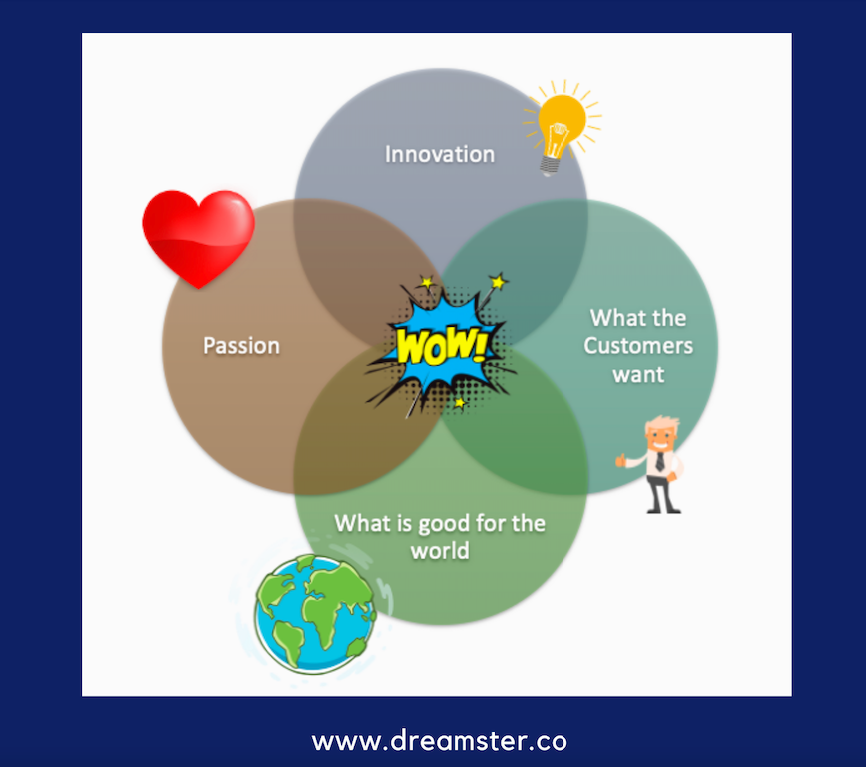
To create a WOW business idea, I normally encourage people to think about these three questions:

  1. What are you passionate about?
  2. How do you add an element of innovation? (For example by using TRIZ model “Theory of Inventive Problem Solving”
  3. What do the customers want? (Find out by talking to people or by researching future trends, e.g. Mintel)

But now I have added a fourth element, as I truly believe that all the future companies need to think about our planet. 

4. Is it good for the world?

I would love to hear from my educator colleagues, how do you think you could add a circular economy and sustainability to your teaching? 

Uncategorized

Identity Crisis After Spinal Injury

We often think that our identity comes from our profession, hobbies, beliefs or maybe from the role in relation to others.

I had a strong identity as a business/team coach and as a circus aerialist. Those were the first things I would mention when people asked what I did.

Then my accident happened, I broke my neck, which caused paralysis on my left side and a loss of sensation on the right side. Now I had a new identity, I was a patient. For the three months spend in hospital I was happy to be a patient. I had clear schedule, when to eat and when to do physio. Between hospital stuff I could have people over, plan when to read and record my audio diaries. At hospital you are also surrounded by people who have experienced similar accidents and being able to share the recovery process with someone was so important.

After I got out, I was still wearing a ‘recovery hat’ for a few months as I had regular physio sessions and appointments with the doctor. My body was working much better, I was able to walk normally and my left arm was improving all the time. That caused me to move to the next stage with my identity.

So who am I now? I am not working, I cannot do aerial and I am not a patient anymore. I have no schedule or things to do, but staying the whole day in bed just makes it worse…

“He who has a WHY to live can bear with almost any HOW.” – Viktor E. Frankl

I was a bit lost, I wanted to have a meaning again, a purpose to push me forward. But I was afraid as well. Would I be able to work already? I still had days when I was very tired. Maybe if I would find a part time job, that could work. Despite everything, I felt I was lucky, as I had two big passions, education and circus. I would not be able to do circus related activities for a while, but to work in education I mostly need my head and that’s one of the things my injury did not damage.

That’s when my job hunt started. I searched for many kind of jobs, but it was still important for me that I could do something that felt meaningful and would allow me to grow professionally.

Soon I found this part time business and entrepreneurship teacher job where I would work with international students. I got really excited as that sounded amazing. The application deadline was in the next day, so I had to get on with it. Soon I was invited to the interview, which went well and soon after that I got the job. I felt so lucky. I would be creating and leading a new entrepreneurship module for Asian graduate diploma students and teaching business for foundation students. I would also work only three days a week, which would give me flexibility and time to work on other projects on the side. A perfect match for my situation.

I couldn’t have wished for anything better, as this gave me a purpose again. Enough direction to push me forward and to allow me to recover not just physically, but mentally too. It really pointed out how important it is to work and do something meaningful.

“There are three main avenues on which one arrives at meaning in life. The first is by creating a work or by doing a deed. The second is by experiencing something or encountering someone; in other words, meaning can be found not only in work but also in love. Most important, however, is the third avenue to meaning in life: even helpless victim of a hopeless situation facing a fate he cannot change, may rise above himself. He may turn personal tragedy into a triumph.” – Viktor E. Frankl

I remember when I fell and I couldn’t feel my body at all, first thought that came to my mind was “thank god my head is ok”. Which is very weird, that even in these kind of situations your brain allows you to see the sunny side. And when I started gaining some feeling and movement I was even more over the moon and I knew I would be fine. That really taught me to be grateful for the things you have and not to worry about the things you don’t have.  It also showed me how you can choose how to react to any kind of situation and I hope that teaching will be with me forever.

* Quotations are from a book called ‘Man’s Search For Meaning – The classic tribute to hope from the Holocaust’. The book is written by Viktor E. Frankl.  

Peru

Meaning of FAMILY! Differences between South America and Northern Europe

Many people know that the Latinos live with their parents until they are a bit older (~35 or until they get married) and it’s normal to have grandparents or uncles and aunts living in the same house. It’s quite different when comparing it to Finland, where most of the people leave home when they are 18-19 years old. For example, I myself left home when I was 17 to study in another city. And when our parents/grandparents get old, we might put them in care homes, where someone else will look after them.

Living in Peru really helped me to understand the difference between these two cultures. It made me understand how individualistic Finnish people are. For example, when I told people in Peru about the care homes, people asked me if I didn’t love my family and how could I do something like that because to them it sounded so cruel. Whereas, in Finland, I don’t think my mum would even want to live with me when she gets old as she wouldn’t want to bother me and she would want to have her own space as well. And this definitely doesn’t mean that I love her any less.

I know there are many aspects that are influencing this, like religion, but I think one even bigger influencer is the support from the government. In Peru, people cannot move away from their parents’ place when they start their studies as it would be financially impossible, whereas in Finland the education is free and the government gives us money to pay our rent and some other living costs like food. How crazy is that? Of course, because of these schemes, we have better opportunities to leave our homes earlier. But is this a good thing?

The dark side

Recently I have a read a lot of stories about young people who are lonely. They just don’t have any friends or other social networks. We have the same problem with elderly people. It is common that elderly people don’t have people to interact with, due to their families living too far away or their busy work and life schedules. Or like many grandmothers, whos friends might have passed away it can get quite lonely. This is a huge problem for us and it creates depression and a predisposition for other mental illnesses. This problem doesn’t exist in Latin America (or at least not on the same scale). They have large social networks and always someone from the family around to talk to and to share joys and sorrows, which is quite amazing.

Independence

Moving away from your parents does make you more independent, you learn to take responsibility for your own actions, you learn how to cook, to do laundry and take care of your own finances. Whereas I noticed that this is something that Peruvians learn a bit later (depending on their background of course). I worked with students where most of them had a maid at home, which is common in Peru as it’s not expensive to have one. Sometimes the maid came around a few times a week, sometimes she lived with the family. They normally cooked, did laundry and cleaned the house. This probably allowed the kids to be kids for longer, which is a good thing, but it didn’t encourage them to be independent.

People are more social in Peru, it’s normal to talk to a stranger in the park or someone on the streets. At least to wish good morning or good afternoon. I already miss that… Now when I am walking the streets, I just want to greet people, but I know people would think I am crazy. I also have this need to give everyone kisses on the cheek. I used to hate them when I first moved to Peru, but I learned to love them and I thought it was a great way to break the ice when meeting new people and when leaving it was a warm and personal way to say goodbye. Now when I am just waving from the corned and saying goodbye, I do miss that human touch and the love I got from my Peruvian friends!

Both of these ways have their pros and cons and I am grateful that I have had an opportunity to experience them both. It’s also important to understand that there are no right or wrong ways to interact, raise your children or treat your elderly. There are just different ways to do them and we can always learn from each other and respect the differences we have.

What does family mean to you?

* These are all my own observations and they are not based on any researched data

Peru

The concept of TIME for a Finnish girl in Peru

Time

One of the biggest challenges for me was the locals understanding of time. When I first moved to Peru I got frustrated a lot, because nothing started on time. At some point, I learned that I needed to chill out because if I was going to continue like a Finn I would just go crazy and probably make everyone else crazy as well. So, I learned that it’s normal for the classes to start 15 minutes late, or sometimes even 30 minutes. And that meant I could not plan my sessions with a tight schedule. And it’s not just the students, sometimes the experts are late too.

The cause of these delays is often the traffic, which is nonmoving at times and people tend to use this as an excuse for their tardiness, but sometimes they are late because of the “public transportation”.

Public transportation or the lack of it

Every morning I travelled to work in a combi. It’s like a small bus, but all of these combis are like small enterprises and there are no schedules for them. Every morning I went to the bus stop and waited, sometimes I waited 5 minutes, sometimes 30 minutes. So I understand that it’s difficult to plan your day when you don’t have a clue when the combis are coming or if they are coming at all.

Also, there are too many cars! More than 10 million people live in Lima and the problem is that it was not build for that many people. The middle class is growing, so more and more people have money to buy cars, which creates a challenge with the traffic. To travel even short distances can potentially take hours. I worked with some people who spent two hours in a combi to get to work and two hours to go back. So they spent four hours a day in a small combi that was probably way too full to even sit down.

The combis are cheap though, so that’s great. I only paid 1 Sol to go to work, which is equivalent to 25 cents, pretty much nothing. But as I mentioned earlier they are often too full and that makes them quite unsafe. I do hope that Lima will get proper public transportation at some point so that people can travel faster and more safely.

Back to the Time

The concept of time at work is one thing and time in a social situation is another. If a party starts at 6 pm, Finnish people try to be there at 6pm, British people arrive a bit later, maybe 6:30 pm, but Peruvians would arrive probably around 8-9 pm. And again, that’s absolutely normal for them. So it’s all about understanding the culture and accepting that people have a different understanding of time.

The funny thing is that now I am used to the more “relaxed” way of looking at it after living for almost two years in Peru, but now I am back in Europe so I need to get myself back to a more disciplined way of living. So when I am in Finland I need to arrive at the meetings a few minutes early and in the UK, I need to be there dead on.

The Concept of time


Uncategorized

6 steps for creating a High-Performance Team

“A team is a small number of people with complementary skills who are committed to a common purpose, performance goals, and approach for which they hold themselves mutually accountable

The world is changing from hierarchical towards a flatter organisational structure. More and more companies are trying it out and making people work in teams.  High-performance teams can really make a difference, but only, if it’s done right!

“If you want to go fast, go alone. If you want to go far, go together.” 

I have been working with different kind of teams for over 10 years, some in sports and some in business and in education. And the funny thing is, that they are not that different from each other. You can easily create groups or even teams, but to make them perform well is a lot harder. Here are some tips for building high-performance teams. The text has been inspired by Katzenbach & Smith – and by their book: Wisdom of Teams – Creating the High-Performance Organization. 

To have a high-performing team, you need to have relatively small number of people, complementary skills, common purpose and specific performance goals, commonly agreed upon working approach and the people to be mutually accountable.

1. Small number (less than 12)

Teams can vary from 2 to 25. But the most productive teams are under 12, some researchers have even said that the most ideal team size is 4.6. When a team is too big, it will be a lot harder for them to develop a common purpose, goals and to be accountable to each other. In these situations, it might be a good idea to create smaller sub-teams to tackle performance goals. Most importantly though, the ideal team size changes depending on the task and team’s purpose.

“Even small groups of people fail to become teams on teamwork values alone.”

2. Complementary skills 

When building a team, it’s important to think what kind of technical, functional and soft skills the team needs and build it based on those. Too often we build teams on personal compatibility or on their position at the organisation. The truth is that we are all different with a different set of skills, and the more diverse the team is, the better chance it has to come up with creative solutions.

If the team has been already created, it’s important that you identify what kind of skills the people have (my favourite tool for this is Belbin Team Roles) and then analyse what your team is missing. You can then either recruit other people with complementary skills or help the current members to develop skills that the team is lacking.

3. Common purpose

Common purpose is one of the most important elements for a high-performing team. By having a common meaningful purpose the team will have clear direction, motivation and commitment towards the goals.

Often people have misunderstood that the management team cannot take part in the process when shaping a common purpose, but this is not absolutely true. Managment can give out some guidelines, but they need to be flexible enough that the team can set their own specific goals, timing and approach. In the more entrepreneurial situation, the team can create their purpose entirely on their own.

“Groups that fail to become teams rarely develop a common purpose that they own and can translate into specific and accountable goals.”

4. Common set of specific performance goals

Having specific goals helps teams to get results. One simple way to create goals is to make them SMART. SMART is an acronym for Specific, Measurable, Achievable, Realistic and Timely. By following these rules the team have a much better chance of reaching them.

Importantly, the team’s performance goals need to be related to its purpose, as otherwise, the team members will be confused and they will fall apart and they won’t work towards the same aims.

“Ten years ago, few understood that performance challenge creates teams, not the desire to be a team.” 

5. Commonly agreed upon working approach

How often should you meet? How will you communicate about the progress?

To build a high-performing team you need to be clear about the working approach. Regular team meetings are in the core, depending on the project/goals, the teams should meet between once a week to once a month. Between the meetings, it’s important to communicate about everything going on in the project. An example of a good tool for that is Trello. Trello is a task management tool that allows teams to plan and follow up the projects, and it’s also super easy and fun tool to use.

6. Mutually accountable

When the teams’ members are all committed to the goals and to the purpose, the environment will become more performance-driven. This creates mutual trust between the members, and because of this trust, people feel that they can challenge themselves more. They feel that they are mutually accountable to each other, so they want to learn more and deliver better results as they don’t want to let the others down.

Conclusion

What really distinguish normal teams from the high-performing ones are the shared leadership, personal commitment to another’s growth and successes, deeper sense of purpose and more ambitious performance goals. It might not be easy to establish, but it will definitely be worth it.

I hope these 6 steps will help you to create high-performing teams in your organisation! And please feel free to comment your thoughts or ask if you have any questions in relation to this topic.


Uncategorized

Three tips for HAPPY life

“When I went to school, they asked me what I wanted to be when I grew up. I wrote down ‘happy’. They told me I didn’t understand the assignment, and I told them they didn’t understand life.” – John Lennon

I love this quote, and it also crystallises my thoughts from this documentary I watched last night. I really enjoy watching documentaries and yesterday I watched one called “I Am Not Your Guru” from Netflix, it’s about “Date with Destiny” seminars run by Tony Robbins. I really admire Tony and I think he is very inspirational, so I was really looking forward to this. When I started the film I was a bit sceptical, as it had lots of American hype (which doesn’t go down that well with a Finnish audience) so I wasn’t sure if it would be too much, and another thing that annoyed me a bit was his language. Why so much swearing? But to be honest, when the film started, I forgot about it quickly and in the end, it was a really powerful film and I would recommend it to you all.

The film aroused a lot of thoughts but also many questions. The most important question was about happiness. So what really makes us happy?

1. Design your own life

I believe there are still lots of people who are just taking it how it comes and not really designing their lives. Brian Tracy actually believes that only 3% have made a written plan about their lives. It might be because people have never tried it or maybe they just don’t believe that it could work.

But why not to give it a try? As there is nothing to lose. At least for me it works, so why not write down your clear goals (where do you want to get to) and how you could get there, could reading books help, maybe finding a mentor who has already achieved those things, just write them down, so simple. Some people are more visual and prefer vision boards, so printing out pictures of the things you would like to achieve and then hanging them somewhere where you can see them on a daily basis.

But it’s important to remember that it does not happen overnight. Your mind is like a muscle, you need to train it everyday. By doing these things your mind will start unconsciously working towards your goals and soon you will start noticing all the small opportunities around you that will create the steps you need to execute your plans. When you are living the life you have planned and that you have dreamed about, there is definitely a bigger chance for you to be happy.

2. How to turn your biggest challenges into superpowers?

What things have you gone through? What challenges have you experienced? How can you turn those into superpowers?

For example, I have dyslexia, which is really annoying as it slows me down when I need to read, write or for example learn a language. But that has allowed me to learn how to be more creative, like how can I learn in a different way. This has also helped me to understand that we are all different, we all have our own challenges and we just need to find a way that suits for us. I also believe that this realisation is one of the reasons I have discovered my passion towards changing the world of education.

Without the problems and challenges we have experienced we wouldn’t be who we are today. We wouldn’t be as strong or as clear about the direction we have chosen. So let’s be grateful for all those things as those problems have helped us to create superpowers that we wouldn’t have discovered otherwise.

3. Be grateful

We all have lots of things we should be grateful for, but we don’t often think about those things. There are many ways do this,  some people have gratitude rocks, they carry a small rock with them and every time they touch it, they will think about something they are grateful for. Personally, before I go to sleep I always think about three things that I am grateful for, it just makes me so calm and happy, a perfect way to put you in the right mood before falling asleep.

Or why not to write them down? Like I have done.

I am so grateful…

  • for having parents and a family that have always loved and cared for me unconditionally no matter what
  • to have an amazing boyfriend who teaches me everyday how to love and be loved
  • for having friends who I have always been able to share my wildest dreams, friends who have believed in me and supported me in achieving those dreams
  • for all the opportunities I have got in my life that has allowed me to grow and to shape me into who I am today and to people who have seen potential in me and supported me along the way

After thinking about all these amazing things that I am grateful for, how couldn’t I be happy? Please give them a try and let me know how they work out for you!

So what really-2

United Kingdom

Can dyslexic action learner study a Master’s degree?

Am I academic enough? How about my dyslexia, will that effect? English is not even my first language. Will I have enough time and energy to do it part-time, alongside my full-time job?

There were many questions in my head when I started the Master’s course two and half years go. I knew I wasn’t really good ‘student’ as I don’t like sitting down, listening and remembering stuff for exams. I prefer action, learning-by-doing and experiential stuff. Could a girl with these characteristics do a Master’s degree?

My family is not academic and I haven’t had many academic role models either. The reason I studied my undergraduate course was probably because my friends went to University and because I found this entrepreneurship course that was actually for people like me (Tiimiakatemia/Team Academy), so it was all about running your own business and learning through the experience. Getting a BBA was a huge thing for me already, so I never even dreamed about doing a Masters degree.

Things changed when I started working at Northumbria University, in the North East of UK. I was suddenly surrounded by academics and pretty much everyone was studying too (most of them for doctorates though). Soon I was offered to study masters, which felt like an amazing opportunity even though I didn’t have a clue if I would be actually capable of doing it.

I was happy to hear that this course, MSc in Leadership and Management wouldn’t be the most traditional one. First of all, you could only do it part-time and everyone in the course had to be working for an organisation so that they could immediately apply the learned knowledge into practice. Then I was like YAY, that suits for me! And it did, all the modules and assignments were connected to you as a leader, you developing the organisation, researching it challenges and creating strategies to solve them.

During the course, I learned to like reading academic articles, even though it takes me twice as long (thanks dyslexia) and most of the times I fall asleep after few pages, I don’t know why, but that just happens. And I also created an interest in research, which I thought would never happen, I even wrote an academic article with my colleague, can you imagine that?

The last two and half years has been exciting, I have learned so many new things, but I must say that it hasn’t been easy, but then again life doesn’t need to be easy all the time.

So yesterday I did my final presentation, the final dissertation was already handed in a month ago. Now I just need to wait, few more weeks and I will know if I have done it. If I have been able to overcome all my fears and do the ‘impossible’…

If there are others like me, who think they don’t fit the normal University system but want to develop themselves further, don’t give up as there are programmes and courses that suit for us too, we can all do it if we really want to, if we just believe in ourselves and if we don’t give up!


United Kingdom

Entrepreneurs by degree

Originally published in BQlive magazine and website on 9/3/2016 http://www.bqlive.co.uk/2016/03/09/entrepreneurs-by-degree/

An entrepreneurial degree achieved without teacher, classroom or exams sounds questionable but Nina Jussila is helping that to come about in North East academia. Brian Nicholls looks into it.

Nina-01

Once you meet Nina Jussila it shouldn’t surprise you that aspiring entrepreneurs from Newcastle Business School have given Northumbria University the distinction of winning a national contest to find successful start-ups.

A learning support officer, Nina is also a key personality behind the launch of a new entrepreneurial business management degree course, which Northumbria to its credit has been the first of four UK universities to introduce. If the course proves as successful as early results suggest, we shall be justified in asking why UK universities haven’t tried it out long before, since it has been turning out successful entrepreneurs in Finland for around two decades now.

Nina herself is a product, and today is an educational entrepreneur. Jyväskylä University, Finland’s second largest university – in terms of masters degrees conferred, and the birthplace of education in the Finnish language (from 1863)  – has gained Jyväskylä (population 135,591) the soubriquet Athens of Finland, precisely for its contribution to education.

Jyväskylä, though the largest city of central Finland is a much smaller host to academia than Oxford, Edinburgh, and certainly Newcastle, Sunderland or Teesside. Yet its innovative programme for entrepreneurs started easily enough. A lecturer there, wishing to try something different, displayed a poster. “Do you want to travel around the world and learn some marketing?” it asked. The first team of students, on graduating, went on the road with the money they had made.

Newcastle Business School’s course has been developed with what’s called the Team Academy in the Jyväskylä Institute of Science and Technology. A 10-year check of the programme in Finland showed the percentage of Team Academy graduates there starting new businesses was five to 10 times higher than in traditional higher education institutions. One out of every three of the Finnish graduates start a business straight after finishing their studies.

To anyone wavering about a university Nina-02_268x179education the course towards an entrepreneurial business management degree sounds tempting: no teachers, no exams, no classrooms. But there’s always a day of reckoning, and for these students there are still assignments to be done, presentations to be made and reflections expressed – all fully connected with their chosen business.

From the start they’re doing business with real money, cultivating real customers. They’re pushed into the field to talk to people and make contracts. “Everything is real,” Nina points out. She heard about the course when considering her future and thought: “That’s something I’d definitely like to do. It’s made such a huge impact on me. I was able to do things no-one would ever expect me to do,” she recalls.

After graduating at 23 and taking a gap year, she started her own company as an educational coach and working on other projects also. “So many young people feel they don’t fit in the normal model of learning,” she observes. “I wondered how I could help others like that to succeed as well. Afterwards I didn’t want to stay in Finland. I thought Spain could be interesting but decided England’s business culture was closer to Finland’s, and it’s a nice place with the opportunity I was looking for.”

Newcastle and Bristol were the first cities to test the course. “I had the opportunity to come to Newcastle for a few months to help out, and here I am after just over two years involved in running the course,” says Nina, who is 26. Northumbria’s course is going well, she feels, as the success in the competition seems to have borne out. “The first year is always hard for students,” she elaborates. “They have no role models. But some people are passionate about a particular interest and think how to build a business out of it. Many come in with no idea at all. They simply feel that running their own business is how they want to do things.”

By the second of the three years’ study they understand the culture more and can see others who started their business. It’s all about learning by doing. Aspirants are not told what they should do. “When they first come in we lend them £10,” Nina explains. “They must make as much with that £10 as possible. They’re a bit shocked at first but that’s the whole ethos.  That’s their seed fund. They bring in some money with the start of their business and invest that for the next project. It works.”

They obviously have to decide how to learn about marketing. They have to find books, find people who already knowledgeable about marketing, and adapt as necessary to plan their project and improve their concept.
Nina-03_540x361

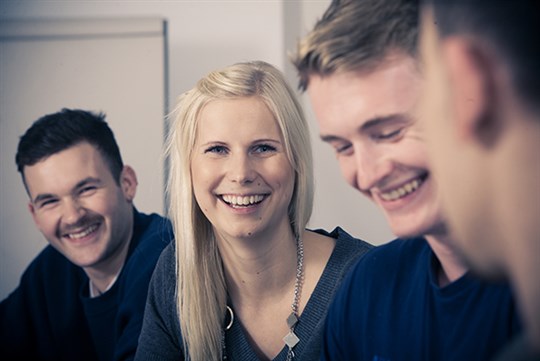
“It’s just-in-time learning,” Nina explains. “We don’t tell them ‘you must learn all this now’ because they won’t need it all now and may soon forget it. So it’s learning through need. Once you need that information you have to learn it.” Also the students are based in a business rather than a traditional environment of academia, so they can be surrounded by actual entrepreneurs. That’s why the Newcastle course is run at the Northern Design Centre at Gateshead, rather than in Northumbria University itself. They don’t have a work placement because, as Nina puts it, their own company is their work placement.

Around 65 students – team entrepreneurs, they are called – are on the Northumbria course, making up six teams in total. Each team company has one coach – “our academic staff coach rather than teach,” Nina stresses. “I’m not academically inclined and don’t have my own team. But I’m part of every team, running everything other than the academic side.”

When Nina and her team colleagues graduated they closed the company they had been building. But four different companies, which had already been started during the course, continued. “On graduating, you can decide whether you want still to be with the company you have worked on. Our third year students here are now deciding whether to incorporate their businesses,” Nina says.

So what of her own entrepreneurial future? “I’d love to stay a few more years in England, then who knows?” she wonders. “I have a passion about considering how to change education. I’m doing my masters now and it could help me get credibility for a future company. People will listen to me more. But I don’t see myself as a lecturer. Bouncing ideas off other people is what gives me energy.”

Meanwhile her existing endeavours draw appreciation. An associate says: “She’s a lovely, vibrant young woman – a huge support and font of knowledge for the students already firming up their business plans for the future.”

You can also find the article from their North East & Cumbria: Spring 2016 Magazine (pp.64-67):


Uncategorized

Cultural Intelligence on leading a multicultural team

In November 2015 we organised an International Team Learning event on behalf of Team4Learning association. I was leading the project but I had an amazing project team with me who were all from different cultures, one was from Finland, another from Spain and third from UK. So what did I learn from leading a multicultural team?

Cultural Intelligence

Cultural intelligence (CQ) is a capability to function effectively across national, ethnic, and organizational cultures. People with CQ have confidence, motivation, interest and drive to adapt cross-culturally, they also understands intercultural issues and differences. They  make sense of culturally diverse experiences and they are good at planning accordingly, bu also good at changing verbal and nonverbal actions appropriately when interacting cross-culturally.

But it’s important to keep in mind that there is a risk if you try to adapt the culture too strongly. You might lose your authenticity, which again is a key for forging relationships in any culture. Like some people find it awkward, inauthentic or even resentful when trying to adapt behaviour overseas. And when you have such strong internal reactions to adapting cultural behaviour, your external performance can suffer. The negative feelings can leak into your performance and make you look awkward or unnatural and that’s something you don’t want to happen.

“Leaders who behave consistently with their own cultural values will engender more positive ratings of effectiveness than leaders who behave inconsistently with their own cultural values”

And it’s important to understand your own limits and how much you are willing to adapt, as example I am more than happy change the way I dress or how I speak, but I wouldn’t be comfortable in the situations where I would be really unequal with man just because I am a woman. As a conclusion you’ll have to break out of your comfort zone to some degree, but make sure you still retain who you are.

How far you would be comfortable to go?

My biggest learnings

I wanted to learn more about my Cultural Intelligence, so I did a Self-Assessment Questionnaire and that revealed some good development points for me, like the importance of planning and preparing on international interactions as at the moment I might be a bit too spontaneous on those situations.

One the biggest learnings for me in this project was when the Spanish member from my team told me how I could have been tougher and more demanding on my leadership. That was interesting as in North European countries like United Kingdom and Finland prefers coaching leaders and when compared to preferences from South European countries like Spain, they prefer directing leaders. I also know that my leading style is quite coaching and participative, and I involve others in decision-making, however this style is viewed as a weakness in many other countries. This is important learning for me, as when leading people from different countries I have to research for what kind of leadership they are used to and then use my cultural intelligence to find the best way to adapt to the situation.

As mentioned earlier, I could be better on strategy and planning and maybe that is some of yours challenge as well. That’s why I want to share these four questions with you, which at least I am definitely going to use when leading an international projects in future:

  • Drive: What’s your motivation for engaging with the cultural dimensions of this project?
  • Knowledge: What cultural differences will most influence this project?
  • Strategy: How will you plan in light of the cultural differences?
  • Action: How do you need to adapt your behaviour to function effectively on this project?

It’s important to remember that everyone will make mistakes when experimenting with cultural adaptation and you shouldn’t punish yourself for them. You can go long way by just signalling to others that you’re trying to learn their cultural rules and that you actually care and respect their traditions, even though you haven’t mastered them yet.

Here a little video of our International Team Learning Event:


References:

  • Livermore, D., Van Dyne, L., and Ang, S. (2012). Cultural Intelligence: Why every leader needs it. Intercultural Management Quarterly, 12, (2), 18-21.
  • Livermore, D. A., Ang, S., & Van Dyne, L. (2015). Leading with cultural intelligence: The Real Secret to Success. New York: AMACOM American Management Association.
  • Molinsky, A. (2013). When Crossing Cultures, Use Global Dexterity. Harvard Business Review.