Uncategorized

How can educators make the world more sustainable?

What can we as educators do to support sustainable development and circular economy?

I work as a business and entrepreneurship coach which means I work with young people around the world. The amount of people I work with is not huge, but then again if educators around the world would come together we could reach quite an audience. Remember, these young people are future change-makers, which means our actions might have a bigger impact than we realise. 

So what can we do? 

In the last few days, I have been searching through many articles and web pages and I want to share two things that I believe all the educators should do; raising awareness and empowering people.

Awareness 

It all starts with understanding the current situation and the challenges that we are facing. For example, are you aware that in 2020 all of our yearly resources where used up by the 22nd of August? 

We also need to make sure people are aware of our current approach which is very linear “take-make-waste” and get people to see all the opportunities and benefits that the circular economy could provide. If you are new to the subject, I recommend watching this brilliant short video (it is only 3 min 48 seconds long).

So how can we adapt this to our teaching? The internet is full of materials, which is great as it means we don´t have to start from scratch. There are two web pages which are my favourites in relation to providing free quality lesson plans and ideas. 

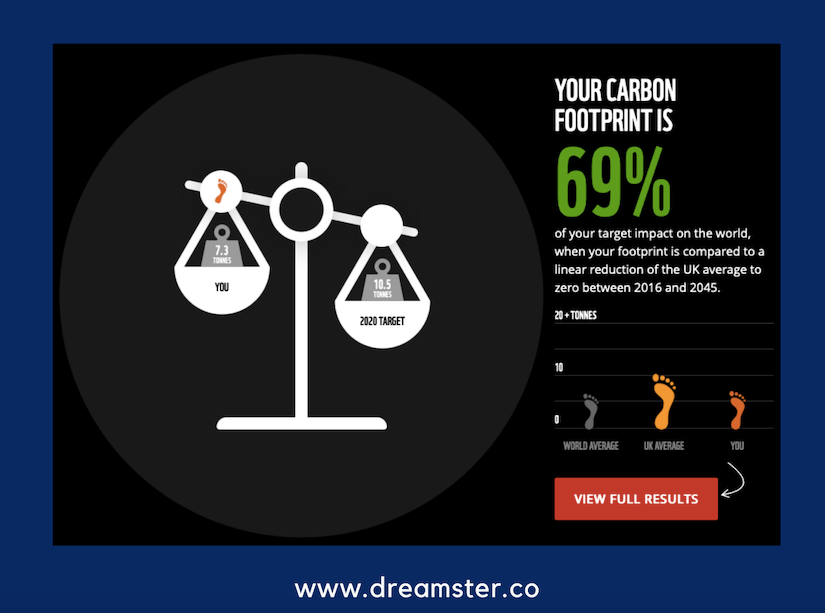
Now that we understand the concept it is time to find out about our own ecological footprint. Quiz time! (As we all love them) My favourite quiz was from WWF, as it was easy to use, very visual and it educates you at the same time. 

Below you can see my results. It is better than the UK average but more than the world one, so I will need to evaluate my behaviour and to see what I could change to lower my carbon footprint. This question is especially in my mind as we are in the process of buying a house. How much furniture and electronics I could buy second hand? And could we potentially install some solar panels? 
Empower

I would like to start with some wise words from my educational hero, Sir Ken Robinson: 

”We have to go from what is essentially an industrial model of education, a manufacturing model, which is based on linearity and conformity and batching people. We have to move to a model that is based more on principles of agriculture. We have to recognize that human flourishing is not a mechanical process; it´s an organic process. And you cannot predict the outcome of human development. All you can do, like a farmer, is create the conditions under which they will begin to flourish” Sir Ken Robinson

As I mentioned at the beginning, we as educators have great power in empowering the new generation. We have an opportunity to create awareness and support people to take action. This can happen in all the fields, but especially in entrepreneurship. One of my roles is to support people in brainstorming new business ideas and I think this is a perfect place to integrate the circular economy to my teaching. 

To create a WOW business idea, I normally encourage people to think about these three questions:
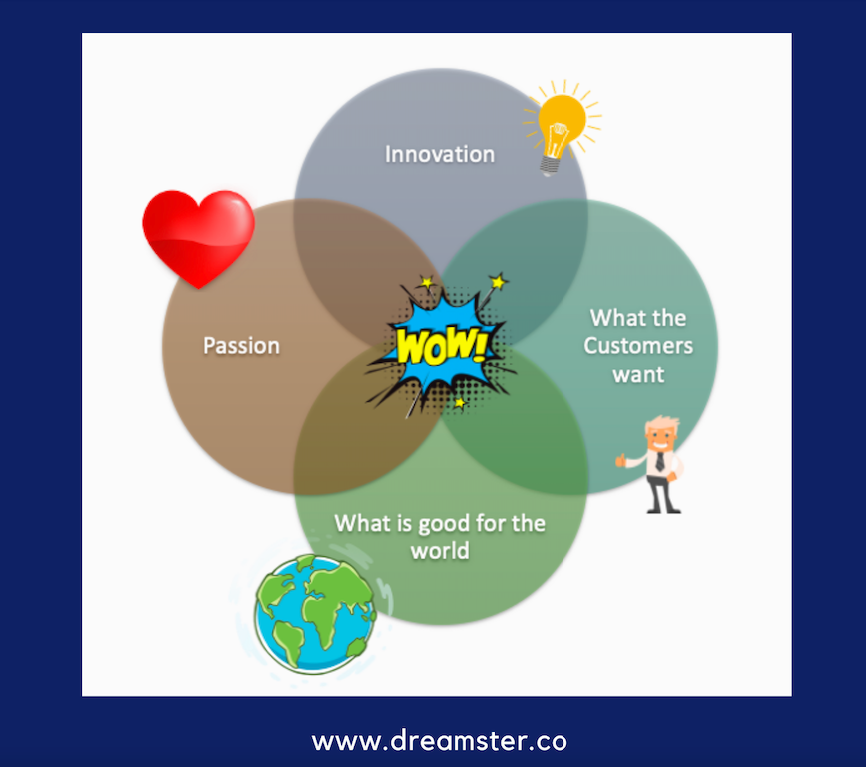
  1. What are you passionate about?
  2. How do you add an element of innovation? (For example by using TRIZ model “Theory of Inventive Problem Solving”
  3. What do the customers want? (Find out by talking to people or by researching future trends, e.g. Mintel)

But now I have added a fourth element, as I truly believe that all the future companies need to think about our planet. 

4. Is it good for the world?

I would love to hear from my educator colleagues, how do you think you could add a circular economy and sustainability to your teaching? 

Uncategorized

Identity Crisis After Spinal Injury

We often think that our identity comes from our profession, hobbies, beliefs or maybe from the role in relation to others.

I had a strong identity as a business/team coach and as a circus aerialist. Those were the first things I would mention when people asked what I did.

Then my accident happened, I broke my neck, which caused paralysis on my left side and a loss of sensation on the right side. Now I had a new identity, I was a patient. For the three months spend in hospital I was happy to be a patient. I had clear schedule, when to eat and when to do physio. Between hospital stuff I could have people over, plan when to read and record my audio diaries. At hospital you are also surrounded by people who have experienced similar accidents and being able to share the recovery process with someone was so important.

After I got out, I was still wearing a ‘recovery hat’ for a few months as I had regular physio sessions and appointments with the doctor. My body was working much better, I was able to walk normally and my left arm was improving all the time. That caused me to move to the next stage with my identity.

So who am I now? I am not working, I cannot do aerial and I am not a patient anymore. I have no schedule or things to do, but staying the whole day in bed just makes it worse…

“He who has a WHY to live can bear with almost any HOW.” – Viktor E. Frankl

I was a bit lost, I wanted to have a meaning again, a purpose to push me forward. But I was afraid as well. Would I be able to work already? I still had days when I was very tired. Maybe if I would find a part time job, that could work. Despite everything, I felt I was lucky, as I had two big passions, education and circus. I would not be able to do circus related activities for a while, but to work in education I mostly need my head and that’s one of the things my injury did not damage.

That’s when my job hunt started. I searched for many kind of jobs, but it was still important for me that I could do something that felt meaningful and would allow me to grow professionally.

Soon I found this part time business and entrepreneurship teacher job where I would work with international students. I got really excited as that sounded amazing. The application deadline was in the next day, so I had to get on with it. Soon I was invited to the interview, which went well and soon after that I got the job. I felt so lucky. I would be creating and leading a new entrepreneurship module for Asian graduate diploma students and teaching business for foundation students. I would also work only three days a week, which would give me flexibility and time to work on other projects on the side. A perfect match for my situation.

I couldn’t have wished for anything better, as this gave me a purpose again. Enough direction to push me forward and to allow me to recover not just physically, but mentally too. It really pointed out how important it is to work and do something meaningful.

“There are three main avenues on which one arrives at meaning in life. The first is by creating a work or by doing a deed. The second is by experiencing something or encountering someone; in other words, meaning can be found not only in work but also in love. Most important, however, is the third avenue to meaning in life: even helpless victim of a hopeless situation facing a fate he cannot change, may rise above himself. He may turn personal tragedy into a triumph.” – Viktor E. Frankl

I remember when I fell and I couldn’t feel my body at all, first thought that came to my mind was “thank god my head is ok”. Which is very weird, that even in these kind of situations your brain allows you to see the sunny side. And when I started gaining some feeling and movement I was even more over the moon and I knew I would be fine. That really taught me to be grateful for the things you have and not to worry about the things you don’t have.  It also showed me how you can choose how to react to any kind of situation and I hope that teaching will be with me forever.

* Quotations are from a book called ‘Man’s Search For Meaning – The classic tribute to hope from the Holocaust’. The book is written by Viktor E. Frankl.  

Uncategorized

6 steps for creating a High-Performance Team

“A team is a small number of people with complementary skills who are committed to a common purpose, performance goals, and approach for which they hold themselves mutually accountable

The world is changing from hierarchical towards a flatter organisational structure. More and more companies are trying it out and making people work in teams.  High-performance teams can really make a difference, but only, if it’s done right!

“If you want to go fast, go alone. If you want to go far, go together.” 

I have been working with different kind of teams for over 10 years, some in sports and some in business and in education. And the funny thing is, that they are not that different from each other. You can easily create groups or even teams, but to make them perform well is a lot harder. Here are some tips for building high-performance teams. The text has been inspired by Katzenbach & Smith – and by their book: Wisdom of Teams – Creating the High-Performance Organization. 

To have a high-performing team, you need to have relatively small number of people, complementary skills, common purpose and specific performance goals, commonly agreed upon working approach and the people to be mutually accountable.

1. Small number (less than 12)

Teams can vary from 2 to 25. But the most productive teams are under 12, some researchers have even said that the most ideal team size is 4.6. When a team is too big, it will be a lot harder for them to develop a common purpose, goals and to be accountable to each other. In these situations, it might be a good idea to create smaller sub-teams to tackle performance goals. Most importantly though, the ideal team size changes depending on the task and team’s purpose.

“Even small groups of people fail to become teams on teamwork values alone.”

2. Complementary skills 

When building a team, it’s important to think what kind of technical, functional and soft skills the team needs and build it based on those. Too often we build teams on personal compatibility or on their position at the organisation. The truth is that we are all different with a different set of skills, and the more diverse the team is, the better chance it has to come up with creative solutions.

If the team has been already created, it’s important that you identify what kind of skills the people have (my favourite tool for this is Belbin Team Roles) and then analyse what your team is missing. You can then either recruit other people with complementary skills or help the current members to develop skills that the team is lacking.

3. Common purpose

Common purpose is one of the most important elements for a high-performing team. By having a common meaningful purpose the team will have clear direction, motivation and commitment towards the goals.

Often people have misunderstood that the management team cannot take part in the process when shaping a common purpose, but this is not absolutely true. Managment can give out some guidelines, but they need to be flexible enough that the team can set their own specific goals, timing and approach. In the more entrepreneurial situation, the team can create their purpose entirely on their own.

“Groups that fail to become teams rarely develop a common purpose that they own and can translate into specific and accountable goals.”

4. Common set of specific performance goals

Having specific goals helps teams to get results. One simple way to create goals is to make them SMART. SMART is an acronym for Specific, Measurable, Achievable, Realistic and Timely. By following these rules the team have a much better chance of reaching them.

Importantly, the team’s performance goals need to be related to its purpose, as otherwise, the team members will be confused and they will fall apart and they won’t work towards the same aims.

“Ten years ago, few understood that performance challenge creates teams, not the desire to be a team.” 

5. Commonly agreed upon working approach

How often should you meet? How will you communicate about the progress?

To build a high-performing team you need to be clear about the working approach. Regular team meetings are in the core, depending on the project/goals, the teams should meet between once a week to once a month. Between the meetings, it’s important to communicate about everything going on in the project. An example of a good tool for that is Trello. Trello is a task management tool that allows teams to plan and follow up the projects, and it’s also super easy and fun tool to use.

6. Mutually accountable

When the teams’ members are all committed to the goals and to the purpose, the environment will become more performance-driven. This creates mutual trust between the members, and because of this trust, people feel that they can challenge themselves more. They feel that they are mutually accountable to each other, so they want to learn more and deliver better results as they don’t want to let the others down.

Conclusion

What really distinguish normal teams from the high-performing ones are the shared leadership, personal commitment to another’s growth and successes, deeper sense of purpose and more ambitious performance goals. It might not be easy to establish, but it will definitely be worth it.

I hope these 6 steps will help you to create high-performing teams in your organisation! And please feel free to comment your thoughts or ask if you have any questions in relation to this topic.


Uncategorized

Three tips for HAPPY life

“When I went to school, they asked me what I wanted to be when I grew up. I wrote down ‘happy’. They told me I didn’t understand the assignment, and I told them they didn’t understand life.” – John Lennon

I love this quote, and it also crystallises my thoughts from this documentary I watched last night. I really enjoy watching documentaries and yesterday I watched one called “I Am Not Your Guru” from Netflix, it’s about “Date with Destiny” seminars run by Tony Robbins. I really admire Tony and I think he is very inspirational, so I was really looking forward to this. When I started the film I was a bit sceptical, as it had lots of American hype (which doesn’t go down that well with a Finnish audience) so I wasn’t sure if it would be too much, and another thing that annoyed me a bit was his language. Why so much swearing? But to be honest, when the film started, I forgot about it quickly and in the end, it was a really powerful film and I would recommend it to you all.

The film aroused a lot of thoughts but also many questions. The most important question was about happiness. So what really makes us happy?

1. Design your own life

I believe there are still lots of people who are just taking it how it comes and not really designing their lives. Brian Tracy actually believes that only 3% have made a written plan about their lives. It might be because people have never tried it or maybe they just don’t believe that it could work.

But why not to give it a try? As there is nothing to lose. At least for me it works, so why not write down your clear goals (where do you want to get to) and how you could get there, could reading books help, maybe finding a mentor who has already achieved those things, just write them down, so simple. Some people are more visual and prefer vision boards, so printing out pictures of the things you would like to achieve and then hanging them somewhere where you can see them on a daily basis.

But it’s important to remember that it does not happen overnight. Your mind is like a muscle, you need to train it everyday. By doing these things your mind will start unconsciously working towards your goals and soon you will start noticing all the small opportunities around you that will create the steps you need to execute your plans. When you are living the life you have planned and that you have dreamed about, there is definitely a bigger chance for you to be happy.

2. How to turn your biggest challenges into superpowers?

What things have you gone through? What challenges have you experienced? How can you turn those into superpowers?

For example, I have dyslexia, which is really annoying as it slows me down when I need to read, write or for example learn a language. But that has allowed me to learn how to be more creative, like how can I learn in a different way. This has also helped me to understand that we are all different, we all have our own challenges and we just need to find a way that suits for us. I also believe that this realisation is one of the reasons I have discovered my passion towards changing the world of education.

Without the problems and challenges we have experienced we wouldn’t be who we are today. We wouldn’t be as strong or as clear about the direction we have chosen. So let’s be grateful for all those things as those problems have helped us to create superpowers that we wouldn’t have discovered otherwise.

3. Be grateful

We all have lots of things we should be grateful for, but we don’t often think about those things. There are many ways do this,  some people have gratitude rocks, they carry a small rock with them and every time they touch it, they will think about something they are grateful for. Personally, before I go to sleep I always think about three things that I am grateful for, it just makes me so calm and happy, a perfect way to put you in the right mood before falling asleep.

Or why not to write them down? Like I have done.

I am so grateful…

  • for having parents and a family that have always loved and cared for me unconditionally no matter what
  • to have an amazing boyfriend who teaches me everyday how to love and be loved
  • for having friends who I have always been able to share my wildest dreams, friends who have believed in me and supported me in achieving those dreams
  • for all the opportunities I have got in my life that has allowed me to grow and to shape me into who I am today and to people who have seen potential in me and supported me along the way

After thinking about all these amazing things that I am grateful for, how couldn’t I be happy? Please give them a try and let me know how they work out for you!

So what really-2

Uncategorized

Cultural Intelligence on leading a multicultural team

In November 2015 we organised an International Team Learning event on behalf of Team4Learning association. I was leading the project but I had an amazing project team with me who were all from different cultures, one was from Finland, another from Spain and third from UK. So what did I learn from leading a multicultural team?

Cultural Intelligence

Cultural intelligence (CQ) is a capability to function effectively across national, ethnic, and organizational cultures. People with CQ have confidence, motivation, interest and drive to adapt cross-culturally, they also understands intercultural issues and differences. They  make sense of culturally diverse experiences and they are good at planning accordingly, bu also good at changing verbal and nonverbal actions appropriately when interacting cross-culturally.

But it’s important to keep in mind that there is a risk if you try to adapt the culture too strongly. You might lose your authenticity, which again is a key for forging relationships in any culture. Like some people find it awkward, inauthentic or even resentful when trying to adapt behaviour overseas. And when you have such strong internal reactions to adapting cultural behaviour, your external performance can suffer. The negative feelings can leak into your performance and make you look awkward or unnatural and that’s something you don’t want to happen.

“Leaders who behave consistently with their own cultural values will engender more positive ratings of effectiveness than leaders who behave inconsistently with their own cultural values”

And it’s important to understand your own limits and how much you are willing to adapt, as example I am more than happy change the way I dress or how I speak, but I wouldn’t be comfortable in the situations where I would be really unequal with man just because I am a woman. As a conclusion you’ll have to break out of your comfort zone to some degree, but make sure you still retain who you are.

How far you would be comfortable to go?

My biggest learnings

I wanted to learn more about my Cultural Intelligence, so I did a Self-Assessment Questionnaire and that revealed some good development points for me, like the importance of planning and preparing on international interactions as at the moment I might be a bit too spontaneous on those situations.

One the biggest learnings for me in this project was when the Spanish member from my team told me how I could have been tougher and more demanding on my leadership. That was interesting as in North European countries like United Kingdom and Finland prefers coaching leaders and when compared to preferences from South European countries like Spain, they prefer directing leaders. I also know that my leading style is quite coaching and participative, and I involve others in decision-making, however this style is viewed as a weakness in many other countries. This is important learning for me, as when leading people from different countries I have to research for what kind of leadership they are used to and then use my cultural intelligence to find the best way to adapt to the situation.

As mentioned earlier, I could be better on strategy and planning and maybe that is some of yours challenge as well. That’s why I want to share these four questions with you, which at least I am definitely going to use when leading an international projects in future:

  • Drive: What’s your motivation for engaging with the cultural dimensions of this project?
  • Knowledge: What cultural differences will most influence this project?
  • Strategy: How will you plan in light of the cultural differences?
  • Action: How do you need to adapt your behaviour to function effectively on this project?

It’s important to remember that everyone will make mistakes when experimenting with cultural adaptation and you shouldn’t punish yourself for them. You can go long way by just signalling to others that you’re trying to learn their cultural rules and that you actually care and respect their traditions, even though you haven’t mastered them yet.

Here a little video of our International Team Learning Event:


References:

  • Livermore, D., Van Dyne, L., and Ang, S. (2012). Cultural Intelligence: Why every leader needs it. Intercultural Management Quarterly, 12, (2), 18-21.
  • Livermore, D. A., Ang, S., & Van Dyne, L. (2015). Leading with cultural intelligence: The Real Secret to Success. New York: AMACOM American Management Association.
  • Molinsky, A. (2013). When Crossing Cultures, Use Global Dexterity. Harvard Business Review.
Uncategorized

How do we really learn?

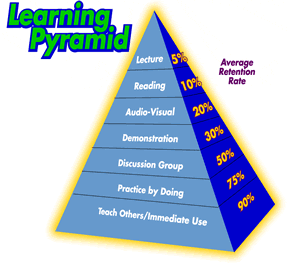
For ages people have been going to schools where teachers teach and “people learn”. World has changed a lot but the schools have not, how is that possible? Teachers use to have all the knowledge which they kindly shared to students who didn’t know that much, but nowadays we can just google and learn the same things from internet, so they are not really needed anymore or at least not for the same purpose. And even more interesting is that there is a lot of recearch about how do we actually learn and really little comes from listening the lectures.

learningpyramid

Learning Pyramid

I really love this video from Charles Jennings & Fuse about model called 70:20:10. It tells how 70% of the learning comes from experience and practise, 20% of the learning comes from networks and conversations we have with other people and only 10% of learning comes from learning formally. And from that 10% we forget 50% in one hour unless we put it into practice. Quite fascinating model I think.

But in real life there is the pressure from the education system “we have to make sure people learn”, so how can we manage that? And the answer is you can’t. It is important to realize that we can’t manage this process, we can facilitate it, support and help to make it happen, but everyone individually has to manage their own learning.

If we want to create learning organisations we have to stop pushing content at people and let the people have right recources to be able to pull the information when they really need it. That way the learning will be more effective, faster and efficient.

What if we would have schools where people could take responsibility of their own learning, coaches supporting them on their path and guiding them to set goals and make plans how to achieve them. Networks around them to help realize they don’t have to know everything, but they will learn how to find the right people and teams to work with. I really believe we can give everyone opportunity to learn this way, it might take some time, but that’s my goal and I will work hard to make that happen.