
What can we as educators do to support sustainable development and circular economy?
I work as a business and entrepreneurship coach which means I work with young people around the world. The amount of people I work with is not huge, but then again if educators around the world would come together we could reach quite an audience. Remember, these young people are future change-makers, which means our actions might have a bigger impact than we realise.
So what can we do?
In the last few days, I have been searching through many articles and web pages and I want to share two things that I believe all the educators should do; raising awareness and empowering people.
Awareness
It all starts with understanding the current situation and the challenges that we are facing. For example, are you aware that in 2020 all of our yearly resources where used up by the 22nd of August?
We also need to make sure people are aware of our current approach which is very linear “take-make-waste” and get people to see all the opportunities and benefits that the circular economy could provide. If you are new to the subject, I recommend watching this brilliant short video (it is only 3 min 48 seconds long).
So how can we adapt this to our teaching? The internet is full of materials, which is great as it means we don´t have to start from scratch. There are two web pages which are my favourites in relation to providing free quality lesson plans and ideas.
- https://circularclassroom.com (Module 1 – “from linear to circular” is my favourite, check it out)
- https://www.ellenmacarthurfoundation.org/our-work/activities/schools-colleges/teaching-learning-resources (I got positively lost in the Circular Toolkit, it´s quite something)
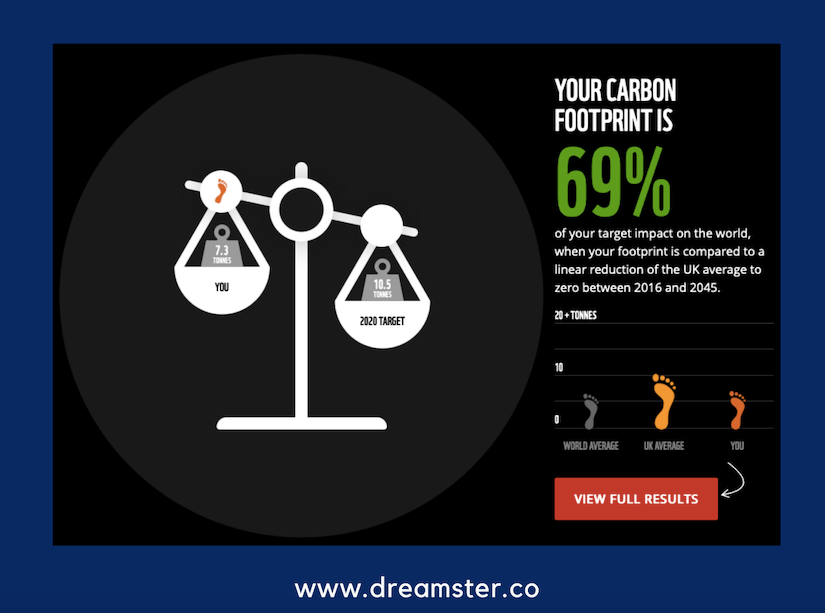
Now that we understand the concept it is time to find out about our own ecological footprint. Quiz time! (As we all love them) My favourite quiz was from WWF, as it was easy to use, very visual and it educates you at the same time.
Below you can see my results. It is better than the UK average but more than the world one, so I will need to evaluate my behaviour and to see what I could change to lower my carbon footprint. This question is especially in my mind as we are in the process of buying a house. How much furniture and electronics I could buy second hand? And could we potentially install some solar panels?
Empower
I would like to start with some wise words from my educational hero, Sir Ken Robinson:
”We have to go from what is essentially an industrial model of education, a manufacturing model, which is based on linearity and conformity and batching people. We have to move to a model that is based more on principles of agriculture. We have to recognize that human flourishing is not a mechanical process; it´s an organic process. And you cannot predict the outcome of human development. All you can do, like a farmer, is create the conditions under which they will begin to flourish” Sir Ken Robinson
As I mentioned at the beginning, we as educators have great power in empowering the new generation. We have an opportunity to create awareness and support people to take action. This can happen in all the fields, but especially in entrepreneurship. One of my roles is to support people in brainstorming new business ideas and I think this is a perfect place to integrate the circular economy to my teaching.
To create a WOW business idea, I normally encourage people to think about these three questions:
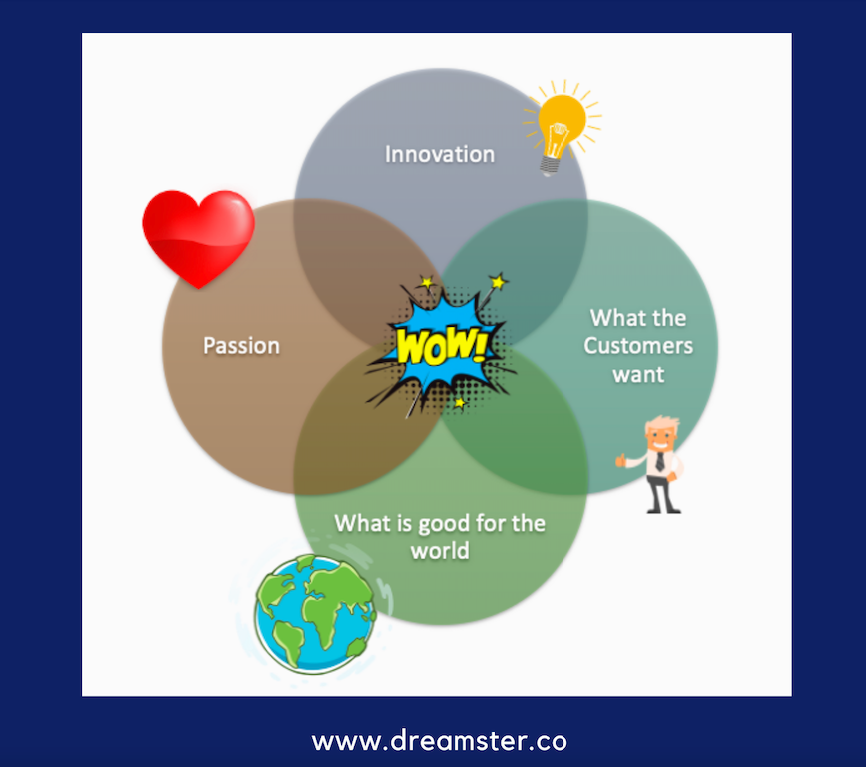
- What are you passionate about?
- How do you add an element of innovation? (For example by using TRIZ model “Theory of Inventive Problem Solving”)
- What do the customers want? (Find out by talking to people or by researching future trends, e.g. Mintel)
But now I have added a fourth element, as I truly believe that all the future companies need to think about our planet.
4. Is it good for the world?
I would love to hear from my educator colleagues, how do you think you could add a circular economy and sustainability to your teaching?
 dreamster.co